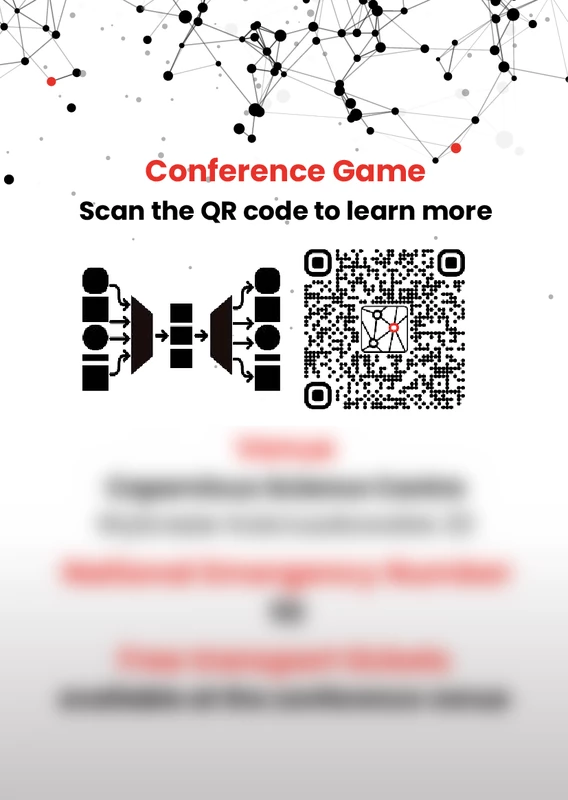
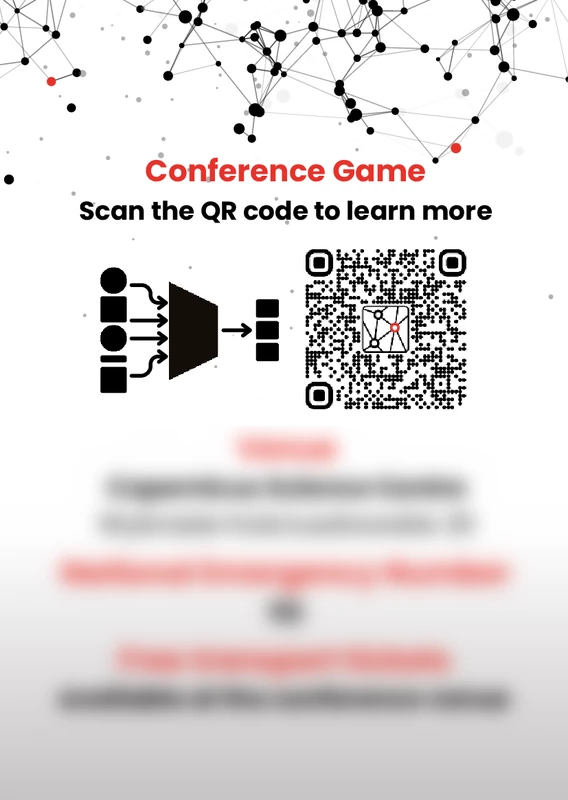
Welcome to our conference badge game! This year each participant’s badge contains one of three symbols, which are based on their first and last names, and roles:
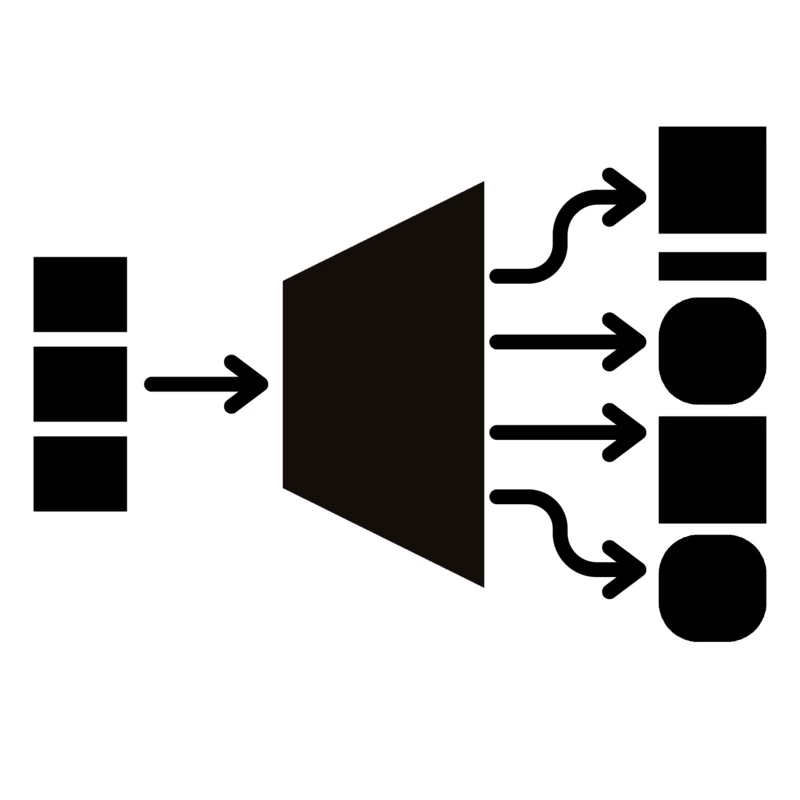
decoder
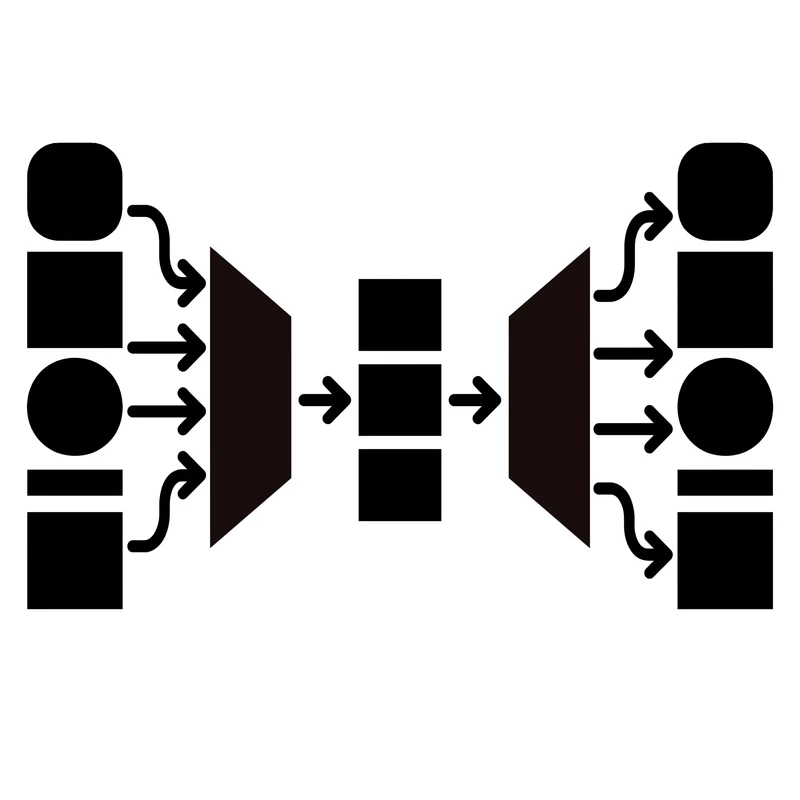
autoencoder
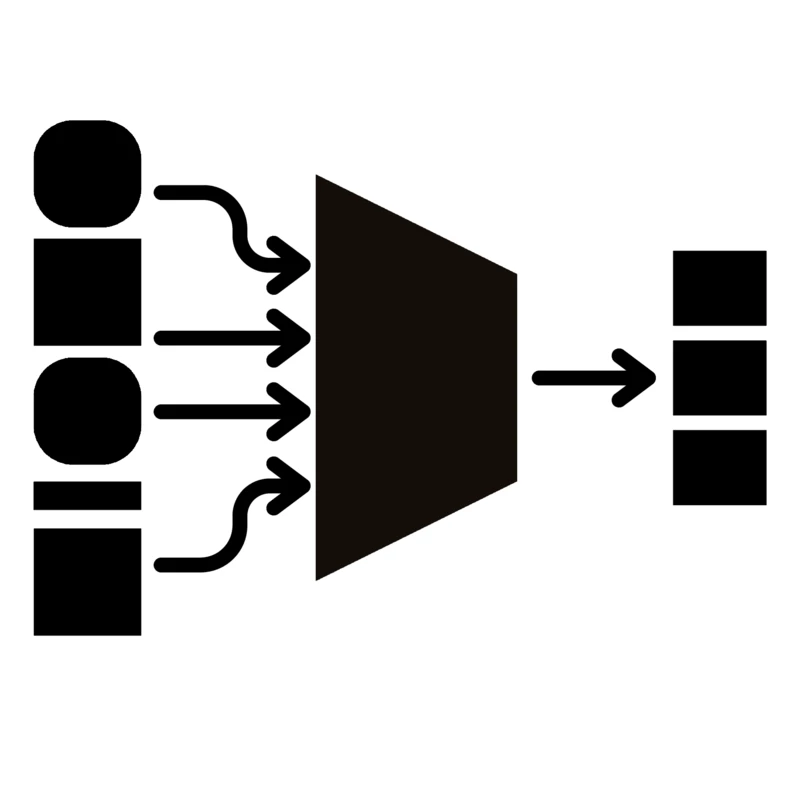
encoder
f(first_name, last_name, role) ∈ {decoder, autoencoder, encoder}
As in classic machine learning problems, your task is to collect data and discover the unknown mapping function. The first five participants who correctly predict all the labels for the test set and give a short description of the function will receive special prizes.
Curious what the game looked like before? See last year’s badge game together with its solution.
/ Rules
The rules are simple – collect as much data as possible and discover the mapping function to accurately predict the labels of the test set. Participants who will succeed with their predictions have a chance to win prizes. If none of the participants solve the puzzle by the end of the conference, the prizes will be drawn among all participants who get the highest number of correct predictions on the test set. You can network with other participants to collect their names and associated labels and visit sponsor booths to collect extra data points that will help you discover the mapping function.
The assigned labels are printed on the back of the badges, so you can ask other participants to show them.
/ Hints
Don’t worry if you can’t find the pattern right away – we will provide hints to guide you in solving the mapping function. But remember, the faster you solve the puzzle, the higher are your chances of winning.
- Hint 1: The function is a sum of votes from a few features.
- Hint 2: One of the features ignores names.
- Hint 3: Type your name. Which hand does more work?
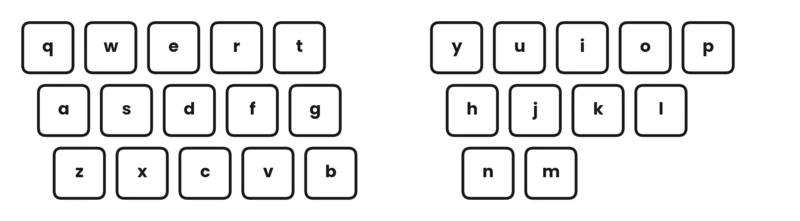
- Hint 4: Do you remember Figure 1 of Attention Is All You Need?
/ Submit results
Submit your predictions for the test set names by filling out the form – you can make multiple submissions (under a reasonable limit). Along with your predictions, include a short description of the function you discovered.
Submissions are closed.
/ Solution
The label is a vote of three features. Each feature votes +1 (encoder), −1 (decoder) or 0, and the votes are summed: a positive score gives encoder, a negative one gives decoder, and zero gives autoencoder.
Before anything else, the name is cleaned: diacritics are dropped (e.g. ł → l, ó → o), case is ignored and only the letters A–Z are kept.
- Those who listen encode, those who present decode. Participants vote +1. Those who present (invited speakers, CfC authors, tutorial speakers and panelists) vote −1. Everyone else votes 0.
- Encoders narrow, decoders widen. Each letter gets a width equal to its position in the alphabet: A = 1, B = 2, …, Z = 26. If the last name is on average narrower than the first name, the name narrows like an encoder and votes +1; if it is wider, it widens like a decoder and votes −1; otherwise it votes 0.
- Which hand does more work while typing your? Type the whole name on a QWERTY keyboard. Just like in Figure 1 of Attention Is All You Need, the encoder is on the left and the decoder on the right: letters typed with the left hand (Q W E R T, A S D F G, Z X C V B) count for the encoder, letters typed with the right hand (Y U I O P, H J K L, N M) for the decoder. More left-hand letters vote +1, more right-hand letters vote −1, and a tie votes 0.
For example, Yoshua Bengio (invited speaker): the role votes −1; YOSHUA has an average width of 14.83 and BENGIO 8.67, so the name narrows and votes +1; it has 5 left-hand and 7 right-hand letters, so the keyboard votes −1. The score is −1, so the label is decoder. Michael Bronstein (participant): the role votes +1; MICHAEL (7.29) widens to BRONSTEIN (12.89), so −1; 8 left-hand and 8 right-hand letters give 0. The score is 0, so the label is autoencoder.
/ Test set
| Name | Role | Label |
|---|---|---|
| Yoshua Bengio | invited speaker | decoder |
| Michael Bronstein | participant | autoencoder |
| Rich Caruana | invited speaker | encoder |
| Kyle Cranmer | invited speaker | encoder |
| Richard Hamming | participant | autoencoder |
| Łukasz Kaiser | invited speaker | encoder |
| Diederik Kingma | participant | autoencoder |
| Daphne Koller | invited speaker | decoder |
| Marta Kwiatkowska | invited speaker | decoder |
| Tomas Mikolov | participant | decoder |
| Niki Parmar | participant | decoder |
| Marian Rejewski | participant | encoder |
| Jerzy Różycki | participant | encoder |
| Jakob Uszkoreit | participant | autoencoder |
| Laurens van der Maaten | participant | encoder |
| Henryk Zygalski | participant | decoder |